
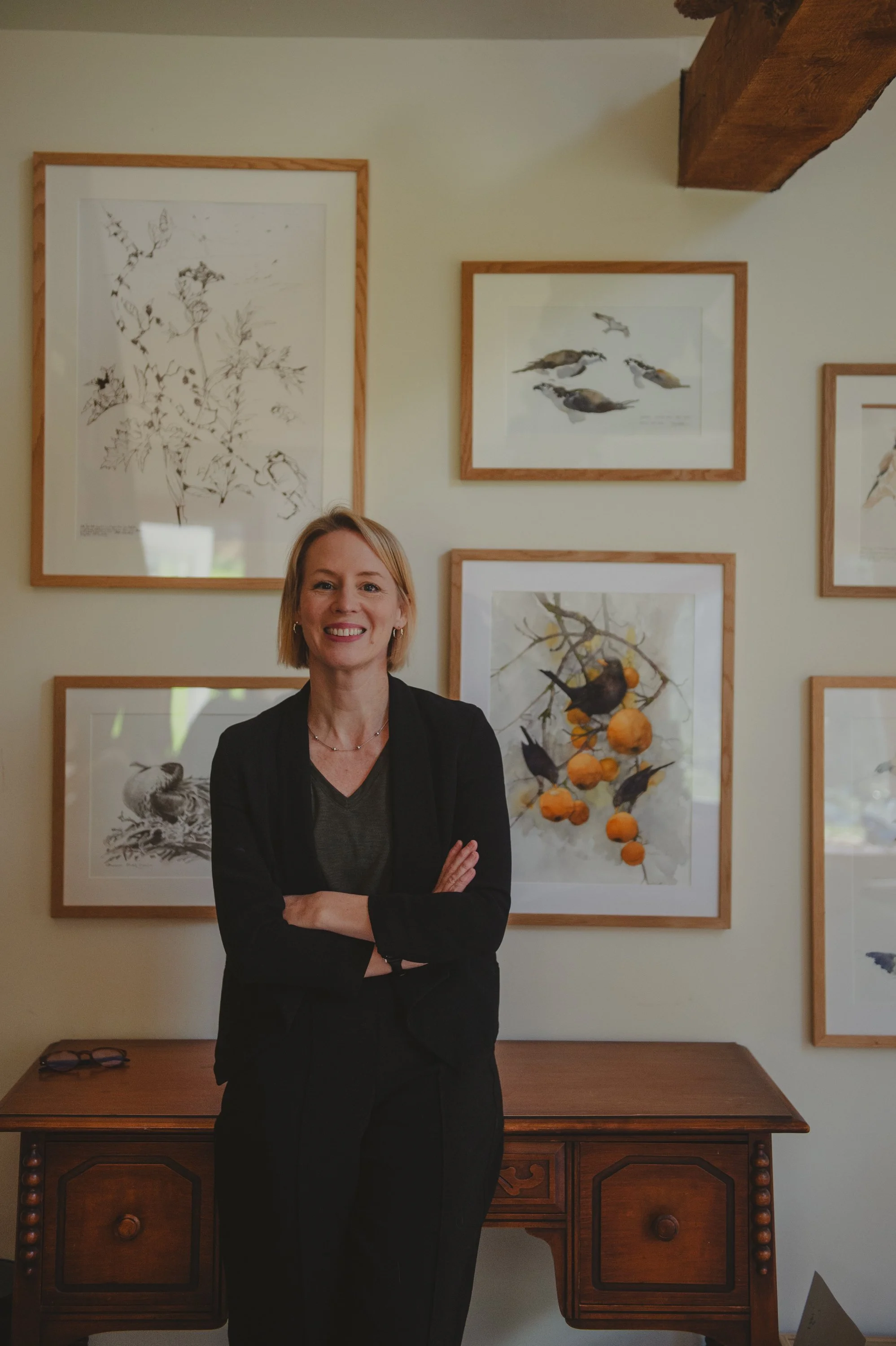
About Me
I have 20 years’ experience working with writers, researchers and education professionals.
I grew up in an academic environment. I worked for over a decade in scholarly, HE and fiction publishing, and after retraining as an integrative psychotherapist, I spent several years as an in-house therapist for staff, researchers and lecturers at the University of Cambridge.
I understand intimately the challenges of doing intellectual work in competitive, high-pressure environments, and the highs and lows of having a restless mind that struggles to switch off.
My Substack gives a good idea of how I work and the sorts of issues I help people with.
Podcasts and collaborations

I had a great conversation with Dr Rebecca Roache of the Academic Imperfectionist about the common difficulties academics bring to therapy - the usual issues of perfectionism, impostor syndrome, and self criticism as they manifest in working life, but also a yearning for structure and certainty, an over-extended sense of responsibility, a difficulty living with unsolved or unsolvable problems, and a relational tendency to expend huge amounts of energy trying to please the unpleasable.


In this collaboration with Dragonfly Mental Health, I developed an introductory training on neurodiversity in academic contexts, exploring why teaching, research and creative fields rely on people with outlier minds, who often have particular needs for thriving in their social and physical environments, and how working practices and environments can be improved for everyone’s comfort and productivity.
Perfectionism and Procrastination - two conversations with The Struggling Scientists
In these episodes I chat with Suzanne and Jayron of the Struggling Scientists about two major obstacles to progress in academic work - perfectionism and procrastination. We look at the different cognitive and emotional conditions that underpin different presentations of perfectionism, and the ways in which fighting these tendencies in ourselves can add to the stress and overwhelm. We consider our fears of what might happen if we worked with and around the inefficiencies of our mind and behaviour, and accepted the natural ebbs and flows of attention and energy. What if we could trust ourselves not to sink into chaos and torpor, and to find forms of structure that go with the grain of our own minds?